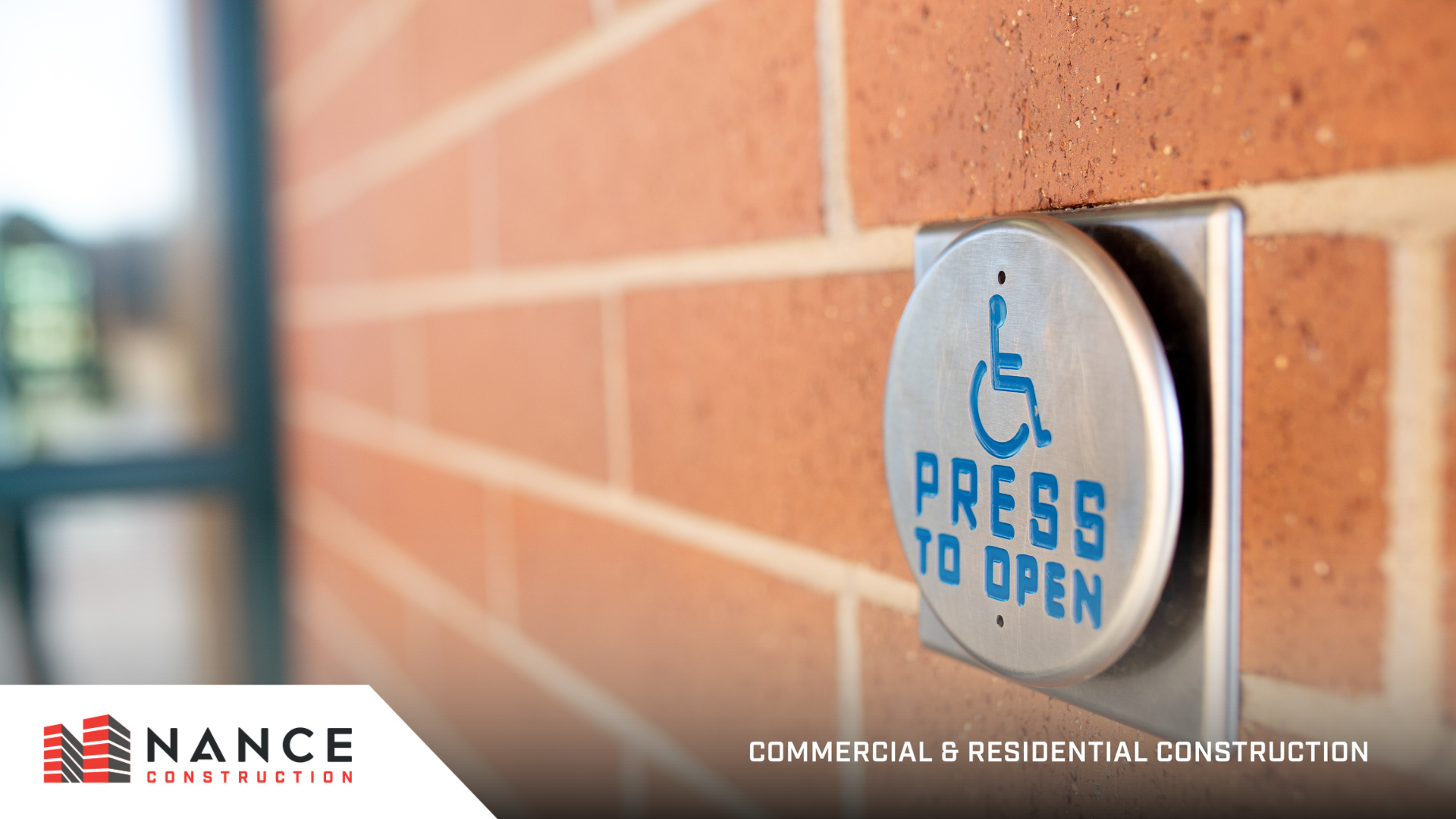
The Americans with Disabilities Act (ADA) ensures that buildings are accessible and inclusive for all individuals, regardless of their physical abilities. For business owners and commercial property developers, understanding ADA compliance is essential to avoid legal repercussions, and enhance the customer experience. ADA regulations include some requirements for commercial buildings, and developers need to ensure compliance in both new constructions and existing properties.
ADA Requirements for Commercial Buildings
The ADA sets forth specific guidelines for commercial properties to ensure accessibility. These requirements encompass various aspects of building design and construction, including:
- Accessible Entrances and Exits: All entrances and exits must be accessible to individuals with mobility impairments. This includes installing ramps, wide doorways, and automatic doors where necessary.
- Parking Spaces: Commercial properties are required to provide a designated number of accessible parking spaces, with clear signage and an accessible route leading to the building entrance.
- Restrooms: Restrooms must include accessible stalls, sinks, and mirrors to accommodate individuals using wheelchairs or mobility aids. Proper signage indicating accessible facilities is also required.
- Pathways and Hallways: Pathways, hallways, and aisles should be wide enough to allow for the passage of wheelchairs. Additionally, flooring should be slip-resistant, and any changes in level must be accompanied by ramps or lifts.
- Signage and Communication: Braille signage, visual alarms, and other communication aids are necessary to ensure individuals with visual or hearing impairments can navigate the space safely.
ADA Compliance in New Constructions
For new commercial construction projects, ADA compliance should be integrated into the planning and design stages. Architects, contractors, and engineers who are knowledgeable about ADA regulations must ensure that all design elements meet accessibility standards. A site assessment can help identify potential challenges and design solutions that promote inclusivity.
Experienced consultants who specialize in ADA compliance can also help to streamline the process and prevent costly modifications with guidance on layout, material selection, and accessibility features that meet functional and legal requirements.
ADA Compliance in Existing Buildings
For existing commercial properties, ADA compliance may require modifications or upgrades to improve accessibility. Evaluate current facilities and identify areas that need improvement. Prioritize essential upgrades to enhance usability for visitors, such as:
- Entrance ramps
- Accessible restrooms
- Compliant parking spaces
The ADA does not require businesses to make drastic changes that would impose an undue financial burden but reasonable accommodations must still be provided. This could include minor adjustments such as installing grab bars or providing portable ramps where needed.
Final Thoughts
ADA compliance in commercial buildings is a vital responsibility for business owners, facility managers, and property developers. Adhering to ADA regulations means that businesses fulfil legal obligations and demonstrate a commitment to inclusivity and accessibility. Nance Construction specializes in guiding businesses through the complexities of ADA compliance. Our comprehensive consulting services ensure that your commercial space meets all accessibility requirements, allowing you to focus on growing your business with confidence.
Contact us today to learn more about our ADA compliance solutions.